Metal business cards can be a smart investment. They can also be a ridiculous one.
The difference isn’t “do they look cool?” They do. The real question is whether your industry rewards the kind of signal a metal card sends, and whether you’ll make back the premium through better recall, faster trust, or simply fewer reprints.
One-line truth: a metal card is a positioning tool, not stationery.
A strong first impression… but make it measurable
Look, people pretend they’re above tactile cues. They’re not.
A metal card lands with weight, texture, and precision that paper can’t fake. In high-stakes rooms, that little moment matters because your prospect is building a story about you before you say a word. Is it fair? Not always. Does it happen? Constantly.
Now, this won’t apply to everyone, but in my experience Metal Kards do best when:
– the buyer is risk-sensitive (they want “stable” and “serious”), or
– the purchase is high-margin (so “premium” isn’t awkward), or
– competition is dense (you need instant differentiation).
From a more technical lens, the card acts like a physical “credibility marker.” Weight and finish are sensory proxies for quality control. If your brand promise includes precision, security, or permanence, metal supports it without you having to argue.
Hot take: if your card needs to “explain” itself, don’t print it in metal
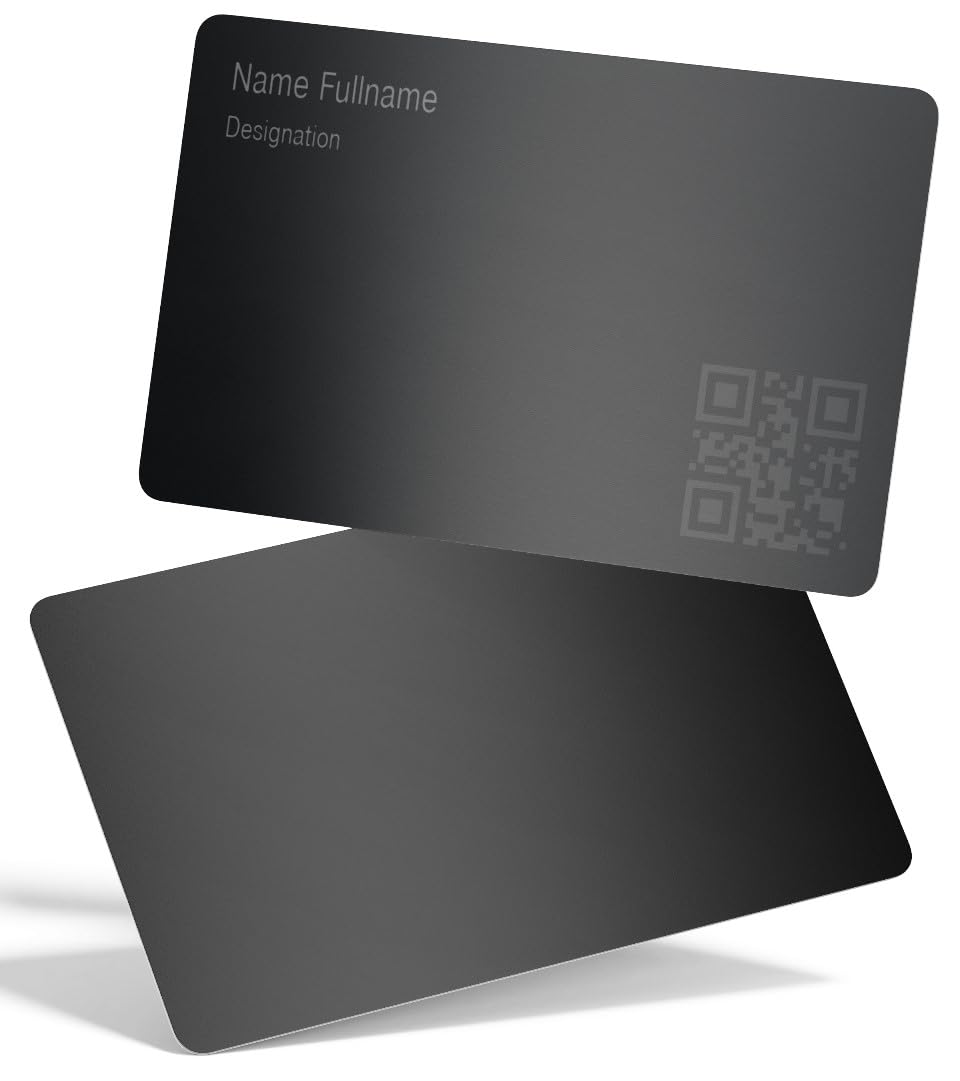
If someone picks it up and you feel compelled to say, “Yeah, it’s metal,” you’ve already lost the plot.
A metal card should feel inevitable for your brand. Not like a gimmick. When it’s right, it’s silent reinforcement.
Where metal cards actually pull their weight (industry fit)
The obvious winners: finance, law, advisory, executive search
These industries trade in trust, discretion, and perceived competence. You’re not just sharing contact info. You’re signaling, I’m established and I’ll still be here when this gets complicated.
I’ve seen metal cards work particularly well for:
– private wealth and HNW advisory
– M&A, private equity, and corporate law
– consulting where referrals are the real pipeline
– executive search (where perception is half the product)
Short version: metal matches the culture.
Tech, product, and engineering (situational)
Tech is tricky because audiences can read premium signals as “salesy” if the vibe is too glossy. But aluminum with a clean, minimal design can hit perfectly: modern, engineered, intentional. Think: brushed finish, tight typography, no clutter.
Healthcare and regulated environments
Here’s the thing: sanitization and corrosion resistance matter more than “wow.” Stainless or titanium can make sense if you’re in medtech, devices, private practice specialties, or anything where hygiene and durability aren’t optional. But you may also face gift/inducement rules or branding constraints, so don’t freestyle it.
Who should generally skip metal
If your sales motion is high-volume, price-sensitive, or heavily transactional, metal can come off as misaligned. Real estate agents doing mass distribution, event promoters, many local service businesses… you’re usually better off with excellent paper stock and a smarter follow-up system.
Metal vs. plastic vs. paper: the cost question people botch
Metal costs more upfront. Everyone knows that. What gets missed is cost per meaningful impression, not cost per unit.
Paper is cheap and disposable. Plastic is durable-ish but rarely feels premium (and can feel oddly “loyalty card”). Metal sits in the “kept on purpose” category.
A useful way to think about it:
Total cost of ownership = production + replacement + missed-opportunity cost
Missed-opportunity cost is the spicy one because it’s hard to quantify. But it’s real. If metal increases follow-ups by even a small amount in a high-ticket business, it can outrun the cost difference fast.
One grounding data point: tactile marketing has repeatedly shown lift over digital-only touchpoints. For example, a neuroscience study on touch and product evaluation found that the ability to touch a product increases perceived ownership and value perception (“endowment effect”), influencing purchase intent (Peck & Shu, 2009, Journal of Consumer Research). A business card isn’t a product, sure, but the mechanism is similar: touch changes judgment.
Durability vs. weight (don’t overbuild this)
People get obsessed with thickness. They shouldn’t.
A heavier card can feel premium, but if it’s annoying in a wallet or catches on card holders, it quietly backfires. Most real-world failure isn’t “it snapped in half.” It’s edge damage, surface abrasion, and repeated flex stress in pockets and bags.
My bias: mid-weight metal is the sweet spot for most professionals. It signals quality without becoming a pocket brick.
Also, corners matter. Rounded corners reduce edge chipping and snagging. Tiny detail, big difference.
Branding on metal: where “premium” dies if you’re sloppy
Metal is unforgiving. Paper hides sins. Metal puts them under a spotlight.
You’re dealing with tolerances, reflectivity, and contrast. That means design choices that look perfect on a screen can become unreadable in real lighting. High-gloss finishes are the biggest offender (they photograph well, then glare ruins legibility at a conference).
A few practical rules that save pain:
– Matte or brushed finishes read cleaner and resist fingerprints.
– Laser etching is consistent and durable, but you need enough contrast.
– Paint fill can boost readability, but poor fill work looks cheap fast.
– Small text is a gamble unless your vendor is genuinely precise.
And yes, you should request samples. No exceptions. Different batches can vary slightly, especially with anodizing and color.
A quick note on eco-footprint (because clients ask now)
Metal can be recyclable, but the details get messy.
Pure aluminum or stainless is easier to recover. Composite layers, heavy coatings, or adhesive-backed elements complicate recycling streams. If sustainability is part of your brand (or procurement requirements), ask your vendor very specific questions about alloy type, coatings, and end-of-life handling.
Not romantic. Just practical.
Ordering reality: lead times, care, and the stuff nobody plans for
Lead times expand with customization. Engraving is usually straightforward. Custom cutouts, multi-color fills, plating, or unusual finishes add steps, approvals, and sometimes rework.
You’ll want to plan around:
– artwork approval and proofing cycles
– tooling or die setup (if you’re doing custom shapes)
– sample run timing
– defect tolerance and replacement policy
Maintenance is simple, but not zero. Scratches happen. If your finish shows wear quickly, your “premium” look degrades faster than you expect. So choose finishes that age well (brushed tends to forgive; mirror-polish does not).
ROI: how to know if metal cards paid off
Don’t guess. Track it like you’d track a campaign.
If you’re serious about ROI, run a basic test for 30, 90 days:
– Give metal cards in specific contexts (high-value meetings, top prospects, referral partners)
– Use standard cards in similar contexts as a control
– Track follow-up rate, meeting booked rate, and deal progression velocity
If metal cards don’t move at least one of those needles, they’re probably just an expensive accessory.
But when they do work? You’ll feel it in a weird way. People bring the card back up later. They mention it. They keep it on their desk. That’s the whole point.
Common pitfalls (I see these constantly)
Overdesign is the big one. Metal tempts people into doing too much.
Other recurring problems:
– illegible typography because the finish reflects light
– trying to cram a resume onto a tiny rectangle
– picking a “cool” metal that clashes with brand tone (cold industrial when you need warm and human)
– handing them out to everyone, then wondering why costs balloon
– ignoring compliance norms in regulated industries
Metal cards reward restraint. They punish noise.
So… worth it?
If your business relies on trust, high-value relationships, and memorable first contacts, metal business cards can absolutely earn their keep.
If your industry doesn’t care about premium signals, or your clients see “flash” as waste, spend the money elsewhere and improve your follow-up system instead (that’s usually where the real ROI is hiding).
The card isn’t the strategy.
It’s the amplifier.